

Hi, Friends,
A little late this weekend but here we are! As you know, I’m a strong believer in finding the books that speak to us even when we are not looking for them. Many of us have experienced this bit of magic that can happen to readers. Welcome to our new regular feature where bookish folks from all over weigh in on a special book that found them at exactly the right moment. You never know, this may be how you find what you or someone you know most need to read right now.
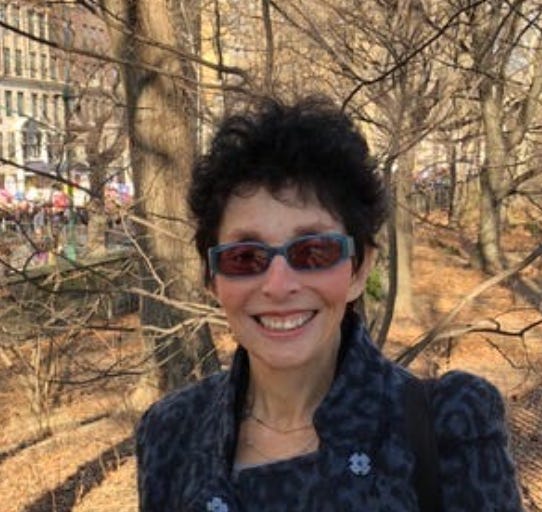
This week we hear from Laurie Stone, a writer I first discovered on Oldster Magazine. I read her popular Substack Everything is Personal for her take on the cultural landscape, women, marriage (which she dedided to try again in her seventh decade), and writing. But the real reason I keep going back: I love her sentences.
Early on I read a short piece of fiction she wrote and was floored. Each sentence carried a mini-narrative in itself. Simple, declarative, even stark at times, they didn’t depend heavily on each other to tell the story. Their writer seemed to assume that the reader would put together the connections just fine. I hate that I cannot put my fingers on that story. But when I reached out to invite Laurie to participate in this series, she ended up sharing what she’d written about the book that led her to this style of writing. You’ll find examples in her recent post, River. Like these:
“People talk about being kind. Maybe they mean give something of yourself away as often as you can.” - Laurie Stone, River
What book found you when you needed it most?
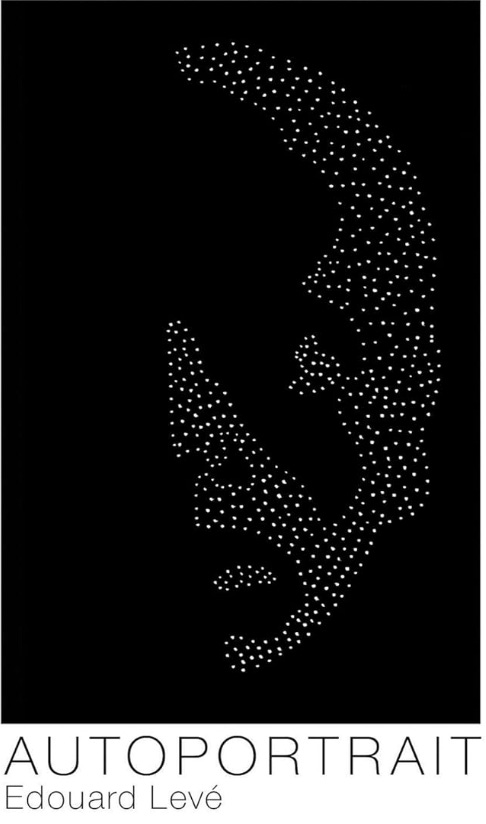
Autoportrait by Édouard Lévé.
When and how did it find you (or how did you find it)?
I read an excerpt in The Paris Review in 2011 of “When I Look at a Strawberry, I Think of a Tongue” by the French writer Édouard Levé.
Why it mattered
I was interested in narrative that could be liberated from plot, that matched the freedom of the monologue, and was, in effect, thought-in-action instead of character-in-action.
I could see how the tiny seeds on a strawberry did look like taste buds. Levé was known as a photographer before writing four, slim books. In 2007 at age forty-two, he killed himself after turning in his last book, Suicide. The piece in Paris Review, translated by Lorin Stein, was an excerpt from Levé’s third book, Autoportrait (2005). I didn’t exactly like it, the way you don’t exactly like falling in love, because everything about your life is going to change.
Autoportrait is a single paragraph, built from seemingly random sentences by an unnamed narrator who is willing to say anything. It’s a list. Most sentences begin with I. Near the start of the book, the narrator says,
“I don’t really listen to what people tell me. I forget things I don’t like. I look down dead-end streets. The end of a trip leaves me with a sad aftertaste the same as the end of a novel. I am not afraid of what comes at the end of life. I am slow to realize when someone mistreats me, it is always so surprising: evil is somehow unreal.”
The narrator talks about sex, food, relationships, books he’s read, places he’s traveled to, experiences he’s collected. All stamps in an album. Often, he will summarize his temperament, as if he’s just noticing it. Like evil. The sentences are beautiful, each a tiny story creating intimacy with the illusion of candor. The book isn’t really about a person named Levé. For memoir to work, the actual person has to disappear into the book’s form. Form is so dominant with Levé, he gives you narrative without a plot.
Narrative without plot! Where have you been all my life? We leave places, but does anyone arrive? We bond and betray, bond and betray again. We find things that have been lost. Then we lose something else. Most plots are teleological, implying—like the creation of the world by God and social Darwinism—that the end of the story is imminent in its origin and according to a guiding plan. If the narrative voice, itself, becomes a bread crumb trail, not much has to happen for the reader to follow it.
Levé’s photography and books are all formal experiments. Emotion does break through the brilliantly detailed Suicide, written entirely in the second person plural. Autoportrait, too, builds to something generous and vulnerable. It doesn’t matter what Levé’s narrator talks about. As soon as he touches something, you want to touch that thing in yourself:
“From certain angles, tanned and wearing a black shirt, I can find myself handsome. I find myself ugly more often than handsome. I like my voice after a night out or when I have a cold. I am unacquainted with hunger. I was never in the army. I have never pulled a knife on anyone. I have never used a machine gun. I have fired a revolver. I have fired a rifle. I have shot an arrow. I have netted butterflies. I have observed rabbits. I have eaten pheasants. I recognize the scent of a tiger. I have touched the dry head of a tortoise and an elephant’s hard skin. I have caught sight of a herd of wild boar in a forest in Normandy. I ride. I do not explain. I do not excuse. I do not classify. I go fast. I am drawn to the brevity of English, shorter than French. I do not name the people I talk about to someone who doesn’t know them, I use, despite the trouble of it, abstract descriptions like “that friend whose parachute got tangled up with another parachute the time he jumped.” - Édouard Levé.
The freedom you can take from Levé is freedom from argument, proof, and resolution. Under his influence, I began dropping conjunctions other than and. And makes things fatter and juicier. And is for a writer who has no stories about enlightenment, recovery, or conversion. Me: “I used to be, and I’m still doing it.” You don’t find out from reading Suicide why Levé hanged himself. He didn’t think it was his job to tell you. He thought his job was to write sentence A so it would lead you begging for sentence B. The brains of homo sapiens will make a narrative out of anything arranged in a series. If you find meaning in it, mazel tov.
Would you read it again?
Yes.
What about you?
As a reader, how do you respond to books that read as experiments, or where the author takes risks that, in your view, makes their work more interesting or challenging? As a writer, where have your experiments led you? What inspired these efforts?
More about Laurie Stone
Laurie Stone is author of six books of fiction, memoir, criticism, and hybrid writing, most recently Streaming Now, Postcards from the Thing that is Happening (Dottir Press 2022), longlisted for the PEN/Diamonstein-Spielvogel Award for the Art of the Essay. She was a longime writer for The Village Voice. More recently, she has written for N+1, Paris Review, and Evergreen Review. Her next book The Marriage Dividend, Notes on the first year will be published in the fall of 2026. She writes the literary Substack Everything is Personal, with over 16,000 subscribers. You can subscribe to her Substack for free or with paid support with a 50% discount at: lauriestone.substack.com/subscribe.
Thank you, Elizabeth and Laurie, for a fascinating discussion. What I love about your work, Laurie, is the directness of it. No bullshit, no apologies, it’s all about the story on the page. A great introduction to a writer influential to you, new to me.
Laurie's writing is always revelatory. The description of "Autoportrait" reminds me of a slim book I love, "The Mezzanine" by Nicholson Baker, in which the protagonist simply rides an escalator in the office building where he works, during his lunch hour. It's funny, offbeat, and quite marvelous.